
Lead Clinic Podcast · Peter Vitale
The Lead Clinic Interview
Peter and I dug into why inbound calls crush data leads, how insurance agencies grow ten times faster with pay per call, and the spreadsheet that accidentally invented the GOAT Club.
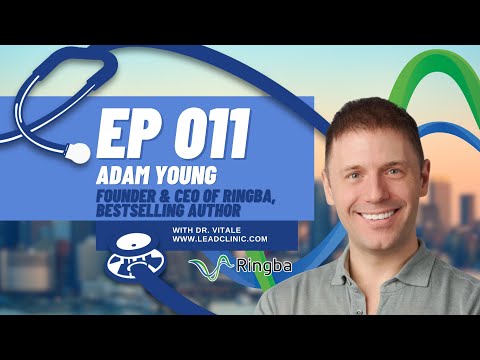 Watch on YouTube
▶ Play the episode
Watch on YouTube
▶ Play the episode
What's inside
- The overflow playbook that took a call center from 12 agents to 500 in 24 months
- The $59,600 check I wrote for a customer whose mistake was his own
- One-to-one consent and consumer-first compliance, told straight
- The 'need movers' signs zip-tied to Miami fences
“Outbound is cool, but everyone hates you. Inbound is awesome. Everyone loves you.”
me, in this episode
Every word, searchable
The Full Transcript
Read the full transcript
Transcript lightly edited for clarity.
Peter Vitale 00:00:01
You ready?
Welcome to Lead Clinic podcast. I'm yours, Peter Vitale. Today I'm joined with Adam Young, the CEO and founder of Ring ba and the author of the Paper Call Revolution. A great book that I suggest everyone got to Amazon, order yourself a copy today. Adam, thanks for joining us. Thanks for providing this fantastic content. Tell us a little bit, a broad background of you and what really led you to write this book.
Adam Young 00:00:38
Well, a couple years ago, I had asked my team to pull a list of everyone that had used Ring ba, our software platform to make a million dollars. And I thought it was going to be a really short list. I was going to reach out to the customers personally and congratulate them. And then I received a spreadsheet back of nearly a billion dollars worth of success and almost a thousand people that had done this. And I was reviewing the data and my mind was blown. And originally I didn't even believe it. I just looked at this spreadsheet and my eyes widened and I couldn't believe what our customers were achieving. And maybe it was naive of me to never look into this data, but I've always been focused on how do I help our customers grow and that's my day to day. And so I realized at that point that I wanted to recognize all these people, and I couldn't call them all personally.
So we started the Goat Club, which is an award that we give to our customers for achieving a million dollars, $10 million, $25 million, $50 million and believe it or not, even a hundred million dollars in revenue using our software. And so at that very moment, I realized like we're really helping businesses and marketers achieve success and changing people's lives. And so I wanted to reach as many of them as I humanly possibly could. And so I realized at that moment I needed to write a book and I needed to take all the knowledge that I had learned over my career prior to rba. And then over the last nine years at Ring, well eight at the time when I started writing this. And I needed to get that in as many people's hands as possible because it could actually help them change the future of their business and their family and their employees if we can teach them about this space.
Peter Vitale 00:02:29
That's fascinating. And so you're saying there are people who've generated a hundred million dollars using your platform, which is a crazy huge number. What is the average ring BA client look like that's generating calls? As I told you before we started, a lot of our listeners are insurance agents running, whether all state, state farm farmers or independent insurance agencies. What is the average marketer on the other side of this equation look like?
Adam Young 00:03:02
Well, I think there's really four flavors of our customers. You have marketers, which could be an agency, it could be an affiliate in their parents' basement. It could be a Fortune 500 company that does marketing. They're using our software to generate phone calls and then to sell them, sell them to big companies, small companies, insurance agents, whatever, what have you. And it's across hundreds of verticals. So not just insurance, but others as well. And so you have the sell side of the equation, we'll call it, and then you have people in the middle who are buying phone calls and then selling them somewhere else. And that could be an agency or a network or just a call broker. And there's a lot of these people actually. And then you have the buy side of the equation, which could be your State Farm agent that just takes four calls a day, or it could be a major call center with thousands of people in it that are buying 5,000 calls a day, or it could even be a Fortune 500 that has six call center sites and they're buying tens of thousands of calls a day.
And then you have the internal marketing department at a company. It could be an insurance agency with 20 people, and they have a marketer in there who's buying Google ads and Facebook ads and getting consumers to call and then routing those to their agents. Or it could be a marketing department at a massive Fortune 500 company, for instance. And so those four types are generally the ones we see that use our technology.
Peter Vitale 00:04:41
And of the ones that are generating the calls, the first two examples you provided, right, it could be an agency that's generating a lot of calls or it could be an affiliate that is in their parents' basement as you put it. And I think you were an affiliate marketer, and I think that a lot of the insurance agents we work with, even myself when that was my primary business, I had no real concept of where these calls were originated from or where leads originated from for that matter. And so we use this word affiliate, which a lot of people in this industry understand, but a lot of the end users of the lead gen products that we sell don't really understand it. So can you explain a little bit deeper on what that really means and what that person's doing day to day?
Adam Young 00:05:27
Yeah, absolutely. And so I think there's a bunch of different labels that people use for affiliate. It could be an affiliate, it could be a publisher, it could be a marketing agency, and it just means somebody that is responsible for creating consumer intent and then selling that to you. That could be a click, a lead, a call, whatever it is. It's a third party that does marketing to get an, excuse me, a consumer excited about a product or service. Sometimes there's a bad connotation with these labels, but the reality is if you can work with a great marketing partner that can make your phone ring off the hook, that can help your business grow in a really big way. And so I would encourage people to not hear the word affiliate and then judge that person or that word, but to look at it more like, Hey, there are partners out there that I can collaborate with who can help me do my marketing because that's not my primary skillset.
Peter Vitale 00:06:32
I think a lot of the insurance agents that we work with, they understand that marketing is not their primary skillset and they understand we're talking agencies that generally have less than 15 employees, often have less than 10 employees. So ultra small businesses in terms of just looking at the macro CRO scope of businesses in this country, ultra small businesses. And so they don't have those dedicated marketing resources. And so tell us why in your mind a call is better than let's say a lead. You talk about this a lot at the beginning of the book, and I think a lot of our agents buy a drastic amount of calls for obvious reasons, but from your perspective, why is it better?
Adam Young 00:07:18
Sure. So fundamentally, let's rewind here and start at the origination, which is a click. A consumer clicks an ad, and then you have to convert that click into a lead of some kind that has two options. One, they fill out a data form, which is like first name, last name, phone number, whatever, or you can get the consumer to pick up the phone and call. Now, if you convert that consumer into a data lead, the common perception is, well, if I have their phone number, I can call them back and they're expecting me to call them back. But the reality is when the consumer fills out the form, that's the moment of highest intent. The moment of the consumer is the most excited about auto insurance or whatever it is. Every second that passes from when they click submit. After that form's filled out, the consumer cares less and less and less and less and less about you, right?
About what you're offering about the product or service or whatever it is. And so when you buy a data leader, your marketing team engages in a data lead, what you're doing is you're effectively having to call the consumer and get them on the phone, which is a nightmare in itself. And then once they're on the phone, you don't know what the consumer's doing, they don't want to talk to you, they don't remember who you are, they don't care about you anymore. You have to rekindle their excitement about what you're offering them to build a relationship. And I know that a lot of call centers have done this for a really long time. It's like their standard operating procedure. The model is, all right, we're going to get data, we're going to call consumers, we're going to get them on the phone, and then we're going to sell them, and I'm going to hype up my call center agents and get them excited about ringing the bell and doing all these things.
But in reality, those people don't want to do that. No one actually loves maybe a rare breed like 1%, but no one actually loves getting on the phone and trying to convince a consumer to do something when they're not excited about that. And I know this for a fact. I worked in a call center when I was 16 years old. I did mortgage leads for a mortgage company, and I remember the average in that call center was like two leads per shift. So we'd work a six hour shift of calling consumers, and this is when they answered the phone. This is when I was 16. So there weren't cell phones. We were calling landlines. They answered, and it was two per six hour shift just to generate the lead and get the consumer excited. And that is horrible. And so no one actually wants to do this, and that's why there's high turnover in call centers.
That's why agent attrition is bad. That's why if your call center isn't performing well today, the vibe of the call center and the energy goes down and everyone performs less, it's a real art to do outbound, and a lot of insurance agents and businesses have mastered this craft and they see it as their growth, like their growth mechanism, and especially with the new FCC changes, I believe this model is a mistake, and it is not the easiest way to grow an insurance agent agency or any business that takes and sells over the phone. Now, an inbound phone call, however, is very different. It is that exact moment in time when that consumer is the most excited about your product and service. They picked up the phone to call you, and so you're not selling them. You're not answering the phone and being like, wait, wait, wait.
Let me tell you why you should talk to me today and trying to convince them with all your energy to talk to you. No, no, no, no, no. They want to talk to you. They have questions. And so what happens is you convert a salesperson into an advisor that answers questions and then guides a consumer through a purchase. They're an order taker, not a salesperson. Now, they don't hate their job. They don't have a hundred people hang up on them every single day. They don't get cursed out by a random consumer. They answer the phone and someone's there who needs their guidance to buy a product or service that they're actually interested in that moment. And so to me, that's a win for the consumer, a win for the call center agent, a win for the agency owner, a win for the backend insurance because it should theoretically have a longer LTV.
The consumer wants it. And so if everybody wins in the value chain, all of the employees, all of the companies and the consumer, that to me becomes the obvious way that I want to do business. And I don't think enough agencies, since your audience is mostly agencies, I don't think they really understand how to leverage the power of a phone call to grow their business. But the reality is you can grow an insurance agency 10 times faster with inbound calls than you can without bound. And if you want, I can tell your audience exactly how to do that, but that's up to you.
Peter Vitale 00:12:34
Well, we love it. They would love to hear that. So tell us, please.
Adam Young 00:12:40
Yeah, and I go into this inside of my book, and yes, I'm going to openly blatantly pitch the book because it will change your life. It went to number one on Amazon for marketing. Congratulations. So it was bestseller in 48 hours. The reviews are great, but I put my heart and soul into this. This is not a chat GPT book. I have a whole editorial team. It took 15 months.
I really put the effort in. I don't know if I'll ever get a return on the time I put into the book, but if it changes one person's life, I'm happy about it. So here's the playbook for growing an insurance agency with pay per call. The first thing you have to do is get over working with affiliates. Yes, some of them suck. Yes, some of them are going to cause issues. Yes, some of them are not the ideal partner for your business, but you don't marry the first person you date, right? You got to date a bunch of people to find the person you want to spend your life with. Affiliates are the exact same way, and I think what agency owners or businesses in general will do is they'll just get an affiliate and they'll make the phones ring and they'll be like, ah, this is great.
And then it doesn't work out. And they're like, I'm never working with affiliates again. That's a mistake. You want to find a bunch of 'em. And then you want to start buying calls from the affiliates and you're going to need technology we make, okay, shameless plug. But the reality is you need it. And here's why. You're going to buy and manage relationships, buy calls and manage relationships from a bunch of affiliates, not one, not two, a bunch. And then what you're going to do is you're going to buy more calls from them than you can answer. So this is a really important thing. If you buy a phone call from a publisher or an affiliate or whatever you want to call it, and you hang up on that call or you don't answer it, the publisher doesn't want to work with you
Because they lose money. So if a publisher spends $20 to get a consumer to call and you don't answer the phone, they lose $20. So what you do is you actually call all your buddies who are insurance agency owners and you say, Hey, listen, why don't you buy some calls from me? Yeah. So if you have 15 agents that can answer the phone, you're going to buy phone calls for 20 or 25 agents and then you're going to sell your overflow to your other friend who owns an agency, maybe even at cost. It's irrelevant. And the reason you're going to do this is because it's much easier to hire another agent and train them when you already have enough flow coming in that that agent can immediately start getting on the phone, right? It's just like an unlimited flow of consumers who want to buy your products.
And so if you're buying phone calls to keep 25 agents productive, you have 15 agents, you're selling off 10, you bring on a new agent, get 'em on the phone, sell off less, bring on a new agent, get 'em on the phone, get 'em productive, sell off less. Tell your publishers you need more. Your other agency friends are going to be like, Hey, I need more phone calls. And you're like, cool. Maybe even sell 'em at a markup. Most of 'em do, right? 10, 20, 30% margin. But the real win is having more consumers than you can handle. So you can go out and hire more agents and then immediately get them on the phone. Now, I have seen this model play out with a call center that started with 12 agents and went all the way up to 500 in 24 months.
Peter Vitale 00:16:14
Wow.
Adam Young 00:16:15
How did they do that? Exactly this way? They sold off their overflow. It was all publisher affiliate driven traffic, and then they got really good at managing the affiliates, selling the overflow, and then they'd have a new class of 15 salespeople come in at a time. They do classroom training, role playing. They had training manuals and books and call recordings and videos. I think it was like a two week training program for how to sell over the phone. And so you build that and then you buy more than you need. You put those agents on the floor, some won't make it cut them, and then you use the additional call flow that you're selling your competitors really to then expand your call center operation or your office operation. You don't need a call center. You're independent agents at home technology can route the phone calls anywhere. And so that's the actual playbook for on demand growing an agency from a small number of agents to essentially eight figure nine figure businesses.
Peter Vitale 00:17:19
And so a lot of the insurance agents that we talk to talk about the intent of a consumer, and you've really hit on that, right? The person's ready to buy. This is the peak time. And so I really have two questions related to that is you talked about Facebook ads or social ads. We'll say you talked about Google or search based advertising. My first question, is those really the primary source of where you're seeing most calls that route through your software originate?
Adam Young 00:17:47
That's a great question. I don't the exact statistics off the top of my head, but I will say this, digital is not the only large channel. Depending on the time of year, it may not even be the biggest. For instance, for insurance, television, advertising is massive, direct mail is massive. Out of home is massive OTT, which is Hulu and YouTube style ads. That's absolutely massive. And so I really love your question because I go into this in the book, which is as a marketer, the beautiful thing about calls is you can generate one anywhere a phone number can go. And most marketers are not thinking about, wait a second, I can generate a call with a yard sign. I recently moved to Miami and I was staying in an Airbnb while I was looking for a place. And outside of the tower I was staying in, there were fences and on the fences that there was a sign that said need movers and then a phone number.
And I walked around the fences and I realized on one side of the fence there was one phone number and on another fence across the street, it was the same sign with a different phone number. And I called it, and it was essentially an affiliate, a marketer that was generating moving calls by just using these little signs, zip tied to fences. And as silly as that sounds, there are hundreds of ways that people can generate phone calls just like that. Most people aren't thinking about, you have digital radio on the internet, you have old school radio, which touches the vast majority of Americans and can be broken down by demographics based on the types of music. You have satellite radio and you have yard signs and billboards and train advertising and bus stations and benches. And direct mail is just a crazy way to reach consumers. And I write about this in the book because I think a lot of marketers can't get out their comfort zone and people see digital, I need Google ads. Google ads is the way, but there's a lot more competition in digital than there is the guy zip tying signs to fences.
Peter Vitale 00:20:09
And maybe the consumer intent isn't all that different.
Adam Young 00:20:13
It's better. Better.
Peter Vitale 00:20:15
And that's really interesting because I think we really, most of the insurance agents I talk with today, we talk about intent and is this lead vendor provide a more intentful consumer than this lead vendor? And this is eyeopening to me because as you think about that, your example of the sign on the fence
Is if someone's taking enough time to call that number, are they any less intentful than someone who went out on a Google search and searched for a moving company? Probably not because they took the time to do it regardless, right? No one's going to sit there and call just because what if I hypothetically move three weeks from now and I move from Miami to Fort Lauderdale or something? I mean, I don't think that's normal human behavior. I don't think most people are. So I think that that intent is probably just as good in both spaces. And so you don't have the exact specific or statistics on which is most prevalent, but obviously digital is kind of like the easy button to an extent. And there's a lot of cost associated with that. Most of the cost is going to meta and to Google and to Microsoft and these other companies. But you touch on direct mail a bit too. And I think that that's obviously a way to generate a lot of consumer interest and have people call. But your platform is essentially tracking what is performing best. So in your example of the fence sign, right, different numbers, it's tracking, alright, is this fence a better location than the other? And that's one of the key benefits of the software you've developed and what led you to develop that software to do those things.
Adam Young 00:22:00
So we talked about earlier, my background's affiliate marketing and I had a real world business when I was 19 years old. And it failed miserably. I ended up having to move back into my parents' basement. I did not have my life together. I owed investors money, I had a ton of credit card debt, and it was a really bad time in my life. In fact, I have no college degree, I had no background. When you just have, I owned my own business as a teenager on a resume, no one will hire you, no one. I couldn't get a job at a fast food restaurant. It was bad. And the only company that would give me a job was this door to door commission only sales company. And so I went in downtown Detroit and sold phone service through Bulletproof Glass in the winter. At one point, I even had a hole in my shoe.
I couldn't afford new shoes, it was really bad. And then I found affiliate marketing by accident. I would work 12, 14 hours a day trying to build a team doing door to door. And then I'd go home and I'd go in my parents' basement and I'd try and make money on the internet until midnight. And then I'd pass out on the futon literally next to my desk. And one day I found affiliate marketing and I got one lead. I made a dollar 25 with this company called Rocket Profit. They're gone. Whoever's Rocket Profit now is not the same one.
And I saw it right in that moment. I was like, this is it. This is my future. I understand this. It's all performance. I can do this. And so I spent the next decade, more than a decade doing exactly that. I went from being negative in my parents' basement, just destitute essentially to a millionaire very quickly. And I've run every single campaign you can imagine, dating ads, education leads, co-reg sweepstakes, immigration offers, video game offers, auto insurance, health insurance, life, you name it, I've done it at some point. But what happens is over time these offers all die and you're at the mercy of the advertiser and calls weren't a thing then because there was no way to really track any of it. And so my current business partner Harrison, who founded Ringo with me, and we had a very successful business. It was four people and we were doing eight figures in revenue and we were responsible for 95% of this very large internet media company's traffic on this campaign.
And they decided that they wanted to cut the division. And so they laid off nearly 50 people, and I didn't know this was happening. I walked down into my living room and I had six giant screens that were monitoring traffic all over the world. It looked like this crazy matrix and nothing was moving. And I literally sat down on the floor and basically had a breakdown because the last two years of my life, I had spent building this very large business. We made a lot of money, but I wasn't like building anything that was sustainable. I didn't have control over it. I wasn't mean. The products were cool and people liked them, but I had no control over the impact I was having. And so I said to Harrison, I was like, I want to build something where we can provide value to other businesses and create something that allows them to grow their businesses, which is our mission at Ring Bows to help our client's businesses grow. So we started looking everywhere. We're like, how do we take what we've learned for a decade? Because Harrison started in the industry when he was 13 years old.
Peter Vitale 00:25:51
Wow.
Adam Young 00:25:51
Yeah. He made his first million dollars in affiliate marketing when he was 13 or 14 years old. It was crazy. I even met him at a trade show when he was 14 years old. He was in the hallway, he couldn't get in because they don't let miners in. And he was hustling people in the hallway, yo, do you have any offers? It was wild. But I was like, dude, I am not doing another affiliate campaign I want to build.
And so we looked all around the industry and we realized that calls were messy. There's no data, there's no analytics, there's no tracking. You can't tell where it comes from. You can't tell what's going on. And so we realized, let's take everything we learned in Ad Tech and then build a platform that allowed businesses to control their growth. And so we spent a year building it. And functionally, I think how it affects your audience is a lot of your audience, they're going to buy leads, send those well calls and they're going to send 'em to their phone system, but they're not going to accurately track what source the call came from and how that source performed. And that's why most smaller companies and agencies or small pest control, even they hate affiliates and it's bad because they don't actually understand how to manage an affiliate and segment and separate what's going on
Peter Vitale 00:27:16
Because
Adam Young 00:27:16
They don't want to pay for the technology to do it. And the reality is the technology is not that expensive. And then the technology to segment the affiliates and see what's going on actually becomes a profit center. Because if you're like, I have 10 call vendors that are affiliates and I can make two of them highly profitable, cut the other eight and repeat the process, now I can scale my business to huge amounts of money. And literally the guy who I gave the most recent a hundred million dollars got award to runs an insurance business, started as a guy of one. I met him at Leeds Con, this very trade show five or six years ago. And he came from affiliate marketing and same thing happened. Affiliate curse, got him, didn't want to do this anymore, wanted to build an amazing business, not one that was reliant on others. And so we sat down at Leeds Con, and I had, maybe this was seven years ago, I dunno. We had very few customers at the time, and I literally just told him this story that I'm telling you right now. And he's like, alright, okay, I've heard of you and Harrison. You guys have been in the industry a long time. Let's do it. And he went from nothing to now he has I think 400 employees and he flew to Vegas from Miami with us on a Gulf Stream.
And so that's the progression and that's what you can do when you apply technology where it didn't exist before. And I'm digressing a little bit here, but I hope you can tell I'm super passionate about this because I don't care about any of the money we've made. Let me tell you what gets me out of bed in the morning is like, oh my God, this is true. I have another a hundred million dollars go to award in my living room right now. The guy who got it is in Miami, or I think he lives in Jupiter and he doesn't know he is getting it. He's coming down and I'm going to present this thing to him in person. It wouldn't surprise me it was both going to break down and cry over it because it created hundreds of jobs and impacted millions of consumers. And it's all inbound. His is all inbound. And so it's win, win, win, win, everyone involved. And we don't often see that
Peter Vitale 00:29:38
Very rarely.
Adam Young 00:29:39
Yeah. And so that's why I think outbound is cool, but everyone hates you.
Peter Vitale 00:29:47
Yeah,
Adam Young 00:29:48
That's true. Inbound is awesome. Everyone loves you. And so which one do you want to build, right? So I don't know. I get real passionate about it, I
Peter Vitale 00:29:58
Can tell. And it's exciting to me to see people. I started my business because I was an insurance agent and I was buying a ton of leads and I felt like these people were kind of screwing me over and I needed to take a deep dive to understand it. Now I'm passionate about helping other insurance agents be successful with marketing. So I understand that passion. And it's great when you see people with this passion because you're excited for the right reasons, right? Everyone's winning together. So you alluded to this a little bit before, but I want to come back into this now. We talked a little bit, you mentioned the FCC regulations and presumably that means the one to one consent requirement that the FCC voted on in December and will be effective next January. Tell us why that's important from your perspective.
Adam Young 00:30:46
Sure. First I'll preface that I'm a board member on Reach, which is the industry lobby group for this. And openly, I was very passionate about not suing the FCC about not engaging with the FCC to try and stop this because at the end of the day, it is the right thing for the consumer, and I want to use my cell phone again. It would be cool if I could answer the phone again. So also, I want to preface this by saying I'm not a lawyer, and so you need to catch your own legal advice. But my understanding of the situation is that essentially if it's not a one-to-one consent, which means if a consumer doesn't see your logo on the form that they fill out, you can't buy the lead and you can't call the lead. And basically if you do, every single one qualifies for a $1,500 penalty per phone call or SMS, and that's going to really suck. There's a lot of ambulance chasers out there that want to make a living off that. And frankly, I think it's, I'm going to say something that is a little less popular here. I think a lot of people really hate the ambulance chasers the TCPA guys. And I guess as a marketer or former marketer, I don't really love the business model. I wouldn't get into it myself, but the reality is if they're actually chasing a claim that's real,
Then someone is violating the consumer's rights.
And so yeah, I mean it's real. And so, okay, they're going to try and enforce it. And so it's going to happen with the new FCC regulations is these people have a much bigger opportunity and a much bigger target. And I think some of them are overly aggressive. I've experienced this myself. I owned an e-commerce business and someone shake me down for A-T-C-P-A settlement. They bought a product from me and consented, but they still shook me down. And I think that behavior is unacceptable. But if someone is calling consumers without consent, I mean sure, right? They're defending the consumer's rights and they're going to have a much bigger opportunity once this goes into effect. So it's going to be much harder to buy leads. It's going to be much harder for a small agency to understand where the leads came from and if they actually have the right and consent to call the consumer. And if they don't, they're going to get hammered by this at some point. It's a foregone conclusion, and I actually like the new FCC regulations because it will prevent a consumer from just getting slammed with phone calls. It will prevent someone from selling a lead to 50 different companies.
A lot of your listeners have probably bought a lead that was exclusive and then find out later that the consumer's been called by 50 different companies and is really pissed off. And so just like an affiliate can be bad, your lead vendor can be bad. And then if you buy a lead that only goes to two people, the person who bought the lead will sell it aged later after they're done with it. And some people buy aged leads because they're cheap and then burn their call center agents out by calling it consumers don't like that. So all of these things end and become a massive liability. I want you to think about this. If you are a 15 person insurance agency and you're making outbound calls using a dialer and you buy age data and say, you know what? Whatever with the FCC, I need my business to survive, and you make 50,000 phone calls over a period of six months, which isn't that many, your liability is now 50,000 times $1,500, you're done. One attorney decides to go after you. They find one consumer, they're going to send a subpoena, get your information on how many people you called, they're going to contact the consumers, and you're going to get hit with a class action and it's going to bury you like you're done. Your business is done.
Peter Vitale 00:34:56
And not only your business, I mean we've talked about this on this podcast before. We've interviewed Eric Troutman, the president of Reach, and that's an organization we're proud to be members of and board members of two, but also the personal liability of an executive who's actively involved in marketing decisions in that business. And most of our clients are small insurance agencies and they're very active. So they have personal, you can have the best corporate structure, the best, most bulletproof corporate structure, but you still have personal liability under the statute. So not only are you your business done, you potentially now need most likely probably with those kinds of numbers, you're going to need personal bankruptcy protection at some point too if you don't settle that for something that's reasonable or affordable to you. I would say this too. And a lot of the agencies that we work with are captive in some sort.
So they're all state agents or state farm agents or farmers agents. And I believe, and I'm interested to see if you would agree with this, that they have more liability potentially because those ambulance chasers are going after the deep pockets and right. Allstate State Farm and farmers have the ability to write 20 million checks without it being a significant, I mean it's significant but not a life-changing amount in their financials. And so I think that those guys are really potentially more at risk than they think because they're not going after John Smith, the Allstate agent, they're really going after Allstate in that claim, more State Farm or farmers or whoever.
Adam Young 00:36:33
Well, they're going to tear John Smith apart first and they're going to try and go upstream.
And so that's an even worse situation because if they think they have an upstream target, the parent company or the captive agency, they're going to just go after that agent until they're screaming basically. And I think what's important to talk about here is while the business owner could lose everything, to me that is not actually the worst case scenario. The worst case scenario is what about all those employees he's got that he's committed to protecting, that he's committed to providing for as an entrepreneur, I eat last, right? I am not the highest paid person at Ringa, and I didn't even take a salary until the last couple years. I was all in and I want my people to eat first. I want my clients to eat before them. We really have to think about who we are responsible for before we actually make a decision like that. And so I think this is kind of a moot point in my eyes because all these agents, all these people that own agencies, they should be just doing it a better way and there's an easier less headache way of doing this. They're just not familiar with it. And that's what I would be engaging in. I think a lot of 'em are scared because they're like, oh, I built this business and this is how we do it. But that's what entrepreneurs do. We adapt. And in my mind, the consumer comes first
And they always have. And I think that if you start from there and say, I'm going to start at the consumer and work backwards, to me, you're going to create the best outcome for everybody.
And it's a simple process. It's like what does the consumer want and when do they want it? How do I engage them when they want it on their terms? How do I offer them a product and service that they want that betters the consumer's life? Then how do I teach my agents to market and sell those products so that the consumer's excited about it? And then once it me as the captive agent or the insurance agent, how do I get the best LTV outcome for the agent or the insurance company I'm working for? If you think about it along those terms, the answer's really clear. Outbound dialing is not the way anyone should be doing business. It's not the best way. And if I were to go into the business, this is not where I would start. It's just harder. They're doing it the hard way because it's the way they know. Sure.
Peter Vitale 00:39:07
So a lot of insurance agents will buy calls. We talked about this at the beginning of year four kind of clients that you have at Ring ba, and a lot of insurance agents will buy from networks or call brokers, and there are many of those out there. And candidly, this is something lead clinics exploring getting into as well. We think we do a great job with data leads, but we think calls is definitely a big part of our future. And I was an Allstate agent in 2015 ish, let's call it, when data lot really came hot on the scene. All web leads at the time had a great product and most of these felt like were outbound dials. They were converting, they
Adam Young 00:39:48
Were, yeah.
Peter Vitale 00:39:49
But what was happening is the pricing was becoming unsustainable because agents would outbid each other in this. And I'm not sure there's a solution for this, but what do you say to the agent that says, alright, calls are affordable to me today. Let's say I can make the economics work at $60 a call, but the economics don't work for me north of $90 a call. And oftentimes we're seeing that happen. How does someone protect themselves? Is there a way to, I really don't know that there is or isn't.
Adam Young 00:40:20
Yeah, there's all sorts of ways to do it. So first and foremost, capacity is the most important thing to an affiliate or a publisher. And what I mean by capacity is the number of concurrent calls you can take, the number of simultaneous calls you can take, if you have 15 agents, you can take 15 calls at a time. It's real simple. If you have two agents, no direct publisher wants to work with you because they can't predict when a consumer is going to pick up the phone and call. And also you're going to be like, Hey, I'll give you $200 for a test. Look, that's not worth
Peter Vitale 00:40:52
It.
Adam Young 00:40:53
I think the reality is that you need to be willing to put up some money in test and know as a call buyer that you're going to lose money during the testing process. This is the same as sending out a mailer or sponsoring a soccer team. You don't know what the outcome's going to be, but you have to test and look at the actual data. And you have to know going in that the first time I buy calls, I'm going to lose some money. Maybe not all of it. You might monetize some, but if you don't go in with that mindset, then you're not going to be successful. It's just like starting a business. When you start a business, you're excited about making money, but you know that on day one you're going to lose money, you're going to have to put in your time and your effort and your energy, right?
I'm no stranger to this. We self-funded. We spent millions of dollars before we made any money, and I knew that going in, right? That's part of business. So same thing. You're going to buy calls, you're going to have to test. You're not going to know. And then when it comes to going to an aggregator like that, and I'm very familiar with this, we recently launched the Ring Book exchange, which is more of a wholesale clearing house for phone calls like this. And so we wouldn't take on an independent agent, but someone who has 20 agents, sure or more, we wouldn't let them sign up unless they were going to write a $5,000 check probably because I can't help them find results unless they're putting up some money and I can't teach. There's not enough runway to teach them. I think a competitive marketplace is really important, and some agents may not like that.
They want, Hey, I need this cost to grow my business, and if other people are competing and paying more, what you need to realize is you are not doing as good a job as you could if you can pay $90 a call. And I'm like, I can't monetize above 60, but we're both selling the same product. I have to be able to set my ego down and say, Peter's better than me. What am I not doing? Maybe you're listening to every single phone call and figuring out how to train your agents better. Maybe your qualification process is better. Maybe your paying attention to the data. Maybe I route phone calls into RingCentral and you route them through ring button and look at all the analytics data so that you understand what's going on. What competitive advantage do you have that I don't? And so I would say that I'm just going to be real about it. I would say any agent that's complaining that some other agent's out bidding them isn't as good at what they do, and they shouldn't be complaining, they should be asking, what's that person doing that I'm not?
Peter Vitale 00:43:36
Well, and that's really interesting. And I think at the time that I was primarily buying calls, a lot of people would say, Peter, you can afford to buy more calls than I can because you are a scratch agent. With Allstate getting a massive different contract with a bigger commission today, it seems like a lot of that's been equalized, and most everyone's on the same contract. So I think that your point is very true. You have to reflect internally and say, alright, if we're all getting the same amount of money after we hit a certain goal, then what's different in my process
Adam Young 00:44:09
Than, well, I I have to challenge
Peter Vitale 00:44:11
That. Please,
Adam Young 00:44:12
I have to. When I got into our business, our competitor, and I'm not going to name them, they were funded by Salesforce, I'm funded by me. They have 150, 200 engineers and unlimited money. I have me and me. So sure, yes, maybe the bigger agency has a better contract. I am an entrepreneur that will accept no excuse for myself. I don't care if I have none of the advantages and all my competitors have them. I still have to figure out how to win. And so I think the reality is that even if you have an unfair contract, some guys started an insurance agent and kicked your ass somewhere in the country even though you had the unfair contract. So I still believe that using these methods, if you try them, learn them and practice them, you can outperform somebody else. And let me give you a specific example. Right now, the biggest opportunity in pay per call is agents that are willing to take calls on weekends, nighttime, overnight. And you know what? Most say I'm not working late.
Okay, well, do you know what happens at six o'clock eastern time call volume dies. Do you know on inbound? Do you know why it dies? There's no one there to buy the calls. Do you know it also dies the cost of advertising to generate the call. So you're like buying calls all day long. If I started an agency, I'd have people working till midnight and I'd start buying the calls at six, and I'd work with publishers that were like, oh my God, you'll buy calls till midnight and be like, yes, but I need them cheaper. And the publisher's going to be like, well, hell yeah, my ad cost goes down, so let's work it out and collaborate. Most people say that I'm not going to do that work. Same goes for weekends. Oh my God, I would crush weekends because I'd have full staff going, I would buy all the calls available.
I'd do that at a higher margin because no one else is doing it. I'd save that money, invest it back in the business and scale. And then once I had enough agents, my competitive advantage actually becomes the amount of calls I can buy. Cost comes down. And so I think the reality is there's always an opportunity to scale a business, but it's always in the work someone else is unwilling to do. And for me, when you lose everything you have a couple times, and I've moved back into my parents' basement three times, I'll be honest about it, and you're just willing to put in whatever amount of work is necessary to win, you will find a way. And I tell young entrepreneurs a lot, you cannot guarantee you're the smartest person in the room, but you can guarantee you're the hardest working. And a lot of people will argue with me on this, no smart beats hard work any time of the day, but not when you're new and not when you're small and not when you don't have resources.
If you're new or small lost or don't have resources, then hard work is the answer until you can learn enough to where you can start using more smart decisions and resource allocations to win. Yeah, that's what I would do. I would just literally like no outbound because you can't after a certain time, but if a consumer calls you, the government has said that's the same as Peter walking into CVS that's open 24 hours a day and buying something, right? Like CVS is never getting in trouble for being open 24 hours a day. You went to them, right? But CVS, even though they're open 24 hours a day, can't call you at 11:00 PM Sure. And so that's really the difference. It's like there's this whole other operating time that doesn't exist. What if you're like, I don't want to pay licensed agents to do this at that time. Okay, hire an offshore call center, hire someone in the Philippines to set appointments for the following day for your people. Give me an excuse. We'll find a way to make it a practice where other people aren't willing to do it.
Peter Vitale 00:48:18
Well, and look, I would even say you don't want to hire licensed agents to do it, but generally licensed agents are paid a base plus a commission. And if you have hungry licensed agents
That want to make money, I mean, think about this, what you've said, everything you've said makes complete sense. And when I ran my agency, we used to be open later than everyone. We would work Saturdays, we didn't work Sundays. I always often think that's still a mistake because consumers are not at their job, so they're handling these things. Also, you look at how much money does Allstate State Farm and these other massive companies spend, especially during football season on advertising. So people are thinking about insurance on the weekends, but if you have these licensed agents that want to make money and they're willing, especially in a primarily remote work environment today, you're sitting at your house, the phone rings, why not sell somebody? You're going to have a bigger opportunity after six o'clock
Than you are going to during the day. And I really would say, this segues nicely into my next question for you, which is there's still in a product that has a long sales cycle, and in certain states, insurance certainly is a long sales cycle. You are from Michigan. I'm from Michigan. Michigan had the highest auto insurance rates in the country for a very long time, and I think now we're like the second highest. It didn't really change much, but oftentimes we would find that in order for somebody to make that down payment, the first month payment, they had to wait for a paycheck. So much of the country lives paycheck to paycheck, obviously. Is there a solution for this? Because I don't have express written consent if I bought that as an inbound call to reach back out to them on that Friday. So I'm waiting for them to reach back out to me. Is there a solution yet in the marketplace where I can capture consent or something to call that consumer again? And I don't think there is, but I'm just trying to think of in products that have a longer sales cycle, what can you do besides reach out to them through email or mail at that point? Is there anything
Adam Young 00:50:25
Call them manually.
Peter Vitale 00:50:26
Call them manually?
Adam Young 00:50:27
Yeah. The TCPA applies to automated dialing. So if you have a calendar invite that says, call bill at nine o'clock on whatever day, and you call them from your cell phone or you manually dial the number, then it doesn't fall under the TCPA. Okay. And so if you're using an automated dialing system that's like appointment call back, whatever the easy way, then don't
Peter Vitale 00:50:52
Do it.
Adam Young 00:50:52
But if you're going to manually call the consumer and you have that relationship, then it doesn't fall under the TCPA. And I want to rewind for a second on what we were talking about with the home agents, because you made a really good point. Advertising happens in the evening. Almost a hundred percent of consumers sit in front of their TV with their phone. I have mine in my pocket. I mean, hell, I got two phones in my pocket right at home. I have three. And so I'm ready to go. I see the ad on tv, and it's in my mind. I can pick up the phone and call when it's late. Now, if you're incentivizing a home agent to take that call, one of the most important things to do is make sure that you incentivize the agent based on their pickup rate. If you route a publisher driven or an affiliate driven phone call to an agent and they don't answer the phone and it goes to voicemail, you just burned the publisher. Now Ring BA has some tools to deal with this, like rerouting a phone call if the target side, the answering side hangs up, or there's other tools to do this. But what I would do is I would incentivize all my sales agents that are working remotely on their answer rate,
And if they send a call to voicemail, I would penalize them or even charge them. I would say like, listen guys, you don't answer the phone and you've said you're available at seven o'clock on a Tuesday. You don't answer the phone. I bill you for the call, or something of that nature. I dunno how harsh you get because I think a lot of times with what we talked about earlier when working with an affiliate and they have this bad label of an affiliate, they think they can just abuse this party. The reality is you want to take care of the ones you find
Peter Vitale 00:52:41
That
Adam Young 00:52:41
Are the best. And how you take care of them is you don't burn their work product. You need to make sure the calls get answered and you need to make sure you pay for them.
Peter Vitale 00:52:51
So that's a great, that leads me to a great question because oftentimes in this performance marketing system that we live in, they're not true partnerships or they're not. Oftentimes, everyone's not looking at it from the other side. So everyone's thinking, well, how can this person do better? For me? This is, I'm an insurance agent, I understand my business. How can I be a better partner for the person who is originating that call, answer the call, obviously don't burn their work product, you just said pay them the negotiate and pay a fair rate for that call. What other things can buyers do that help the other person that they might not think of? Because I think having a true partnership, that's going to be what really drives a successful campaign. And I don't think enough people are focused on that and transparently, I don't think most of my clients are focused on it. I don't think most insurance agents are focused on it. They're somewhat sometimes self-absorbed in their own world, and I certainly was. But how can we be better to our partners who are originating the calls?
Adam Young 00:54:00
Yeah, I think this doesn't just apply to insurance. I think this applies to all business. And I would assert that if you want to become actually wealthy, that what you get out of any partnership is irrelevant. And the moment you start thinking that way, that's when you can build an eight figure, nine figure, 10 figure net worth. I don't think that real success exists unless you are focused on what you are delivering to other people and what you get out of it will come. And so this is actually our philosophy at ringa and mine personally, and Ring BA's values are my personal values. And I wake up every morning and I go, how do I serve my customers better? How do I serve my team better? How do I serve my girlfriend better? How do I serve my parents better? It doesn't matter. How do I show up on time to your podcast, ask you how long it goes, and then try to overdeliver for your audience, right?
This is the mindset. If you want to become independently wealthy, also change the world. And it's the only one if you want to change the world. And so the way you work with publishers, and I'll run you through what we do at the Ring Book Exchange, it's very similar. First, it starts with the agreement. My dad always said to me that an honest man will give you an agreement. And so we have a standardized contract for all our sellers on the exchange that explicitly outlines acceptable behavior and unacceptable behavior. And then what will happen if you engage in acceptable behavior and unacceptable behavior, there is no whatever. It's just very clear. And in both agreements, on the buy and the sell side, we generally will not negotiate them. I don't care how big the company is. It says that we are the arbiters of truth.
If someone's upset about something, we're going to dive in and we're going to make the decision that we feel is best. Maybe we don't get it right a hundred percent of the time, but I'm not willing to give up that control because my job is to serve all parties. And I think an insurance agent should think about it the same way. It starts with an agreement and an insertion order. If you don't have one of these, we're actually launching what we call the perfect io, which was written by the legal team that wrote all of Ring's, MSAs, or terms all of our exchange agreements. They know the industry really, really well. And I don't know how much we spent on, we've spent more than $10,000 on it, maybe 15. And I haven't gotten the invoice yet, but we're selling it for a very low fee,
Peter Vitale 00:56:37
Really.
Adam Young 00:56:38
And so I'll give you the link to that when it's live. It won't be when this podcast drops but you can always, anyone listening, you can always reach out to us and you can buy it for a very reasonable price and use it. And so it's customizable. But the reality is you partnership, and a lot of publishers are not good at this as well. They don't have a legal team. It might be a team of four and you're like, I'll give you $40 a call. And they're like, cool, I trust you.
And then when something bad happens, you have no agreement, which said, Hey, you can't do this. Or Hey, this is acceptable. And you get mad at the publisher. This is not the publisher's fault, this is the person buying the call's fault. It's always the person buying the call's fault. Because if you didn't set out the rules and put it in writing, then they don't know what they can and cannot do. And so if you didn't do those things and they did something you don't like, guess what you do? You pay them for what you bought because you didn't tell 'em what you wanted.
And that's what we do at the exchange too. If a publisher comes up with something creative that doesn't break the rules and a buyer doesn't like it, and we feel that we don't want to charge the buyer for it, I'm still paying the publisher because that's on me. And I think that's what happens a lot, is that people will not pay if they were given credit terms. And they also didn't tell people what's okay or not okay, if the publisher misrepresents what they did, if it's outbound and you thought it was inbound, or they did something that you clearly contractually outlined is not okay, fine, they knew you knew you didn't get paid, whatever. But if that's not the case and you don't pay, what most people don't realize is there are literally chat rooms filled with hundreds of people, sometimes thousands. And if you don't pay, your name drops in that chat room or gets on a list now the good publishers won't touch you.
Sure. And so that's rule one. Rule one is even if it didn't work for me, but it was legit based on what we agreed, you pay for it just because you took 10 calls and couldn't close those consumers does not mean that you don't pay for the advertising. If you want to run a newspaper ad, they make you pay upfront. If no one calls, that's your problem. The same goes for this, and it's something that I don't think people follow. And you want to build up a reputation of paying on time, paying exactly as you should, paying quickly if possible. Even if you're buying leads or calls that maybe don't work, you can tell the publisher like, Hey, we bought $2,000 worth of calls. They didn't really work for us. We sold some, we didn't sell others. Can you fix it? Can you make it better?
Oh, you can. Alright, let's test that for this amount. Oh, you can't or you don't want to. Cool, thanks. Here's your check, we move on. You want to treat these people like you would an employee. It's a partnership. And if you go into it with that mindset and then you find the one that's amazing, you treat them well, you have a good reputation, this person changes the outcome of your business. And so I think it really goes back to what we started on this with and that is you need to serve your partners. This isn't about you, this is about your partners. And if you can make it amazing for them, an amazing experience, they want to then go above and beyond. Sometimes they'll take less money to work with you. There is no question that people would rather do business with me than someone else in the industry simply because they know I'm going to show up every time.
I'm going to deliver to the best of my ability. And if they have a problem, they can call me. And we had a problem with a customer last month and it ended up in me writing a, I believe it was a $59,600 check. I didn't want to, I certainly didn't have to. Our terms said I didn't have to, they're not mad. It was their fault. They literally owned it. They were like, Hey, we screwed this up. I'm screwed. Will you help me? So I did the math. I didn't love it. I didn't enjoy writing the check, but I did it. Why? Because I served them. They're a great customer. They've always been good to me. They always refer me business. They took care of me and they made a huge mistake that could almost put them out of business. And if I give them that credit, I don't make any money. I'm like even, but I can help save this disaster area for their business. I'm going to do it. Most people wouldn't. Most people wouldn't. Yeah. They'd be like, I want the $59,000, but for me, I'm in this forever.
And that's the mindset that I think agents and agencies need to have. It's like I'm in this for the rest of my life, so what's my reputation going to be in 15 years and how big do I want to grow this thing? Because you know what? Allstate pays their bills. State Farm pays their bills. They always pay. And so you should too. And Allstate thinks maybe not always, but these big companies are like, how do we create opportunities for all these agents to feed their families and do all these things? They're serving the agents. The agents are serving consumers. You also have to serve your partners.
Peter Vitale 01:02:03
And I think I talk about this a lot and I think that the story you just told, I always call it playing the long game. Everything I do, much like how you said you've funded your own money with funded Ring, with your own money. I funded lead clinic with my own money and everything is about the long game. I'm not here to do something that's going to make an immediate result tomorrow. I'm here looking at the next 20 years
If not longer. And I think that when people have that perspective, they write the $59,000 check because you realize over the long term that that's a better business decision than the pain of the short term. And I find that there are very few people, Adam, that have this sort of philosophy. And so I'm glad that you've come here and you've shared that because I try and share that as much as I can. Because when you really take a long-term, put a long-term lens on things, it changes your decision making. It changes. Instead of saying, okay, well this guy screwed, who cares? It's not my problem to, okay, let me help because this will also benefit me in the long-term. It'll also benefit this person, save their business, save the jobs that they've created. And I think that's really an important lesson for everyone to take away.
And it's really, it answers the exact question I asked you, how do you be a better partner to people? Which is do the right thing, treat people as you want to be treated. If you can't close the leads, you still pay for them. But you also come up with the, as you said, if this isn't what you agreed on, you didn't say that this is what you wanted or this that's a you problem, you should have thought about that. And unfortunately, there are a lot of things you can't consider at the time, and that's just the pain of being an entrepreneur. And the unknown unknowns are oftentimes very costly, but that's just part of business. And so this is a great perspective and it's fascinating to see someone think this way because it is truly different than most people think in this. And so what I'm interested is you've been at Ring, you've created this about nine years ago now, you said, what's the horizon for Ringo? What do you continue improving the products you built? You're doing the exchange now. What other fun things are on your roadmap or what do you look most forward to?
Adam Young 01:04:37
A lot? And so I think as our business grows, we think longer and longer ahead. And I'm currently writing a second book right now, which will, I think I'll get it done faster this time. We're also doing a workbook to go along with this one so that people can follow my frameworks of how to build a marketing business. I'm going to teach that in a course actually.
Peter Vitale 01:05:01
Awesome
Adam Young 01:05:01
As well. And then Harrison and I recently bought the Ring Mastermind house in downtown Miami. It's been under construction for a few months, but it has an office and a studio and a giant space, very inspirational space so that we can have our customers and other people depending, come to events for instance, like mastermind events, how to run high performance teams, how to recruit our frameworks for growing a business, marketing, personal development. I've done some of these events previously and we get to track the results. And so the last time I did one, I had 25 of our customers in a room, all CEOs and almost all of them grew their businesses. After leaving that event, we dove real deep into assessing team performance and making hard decisions and really evaluating from the outside what our missions were and if we're serving them properly. So I'm really excited about that. And the events business that we're building, again, not because of the money and we'll probably for the events, we'll probably put all the money into the events. Really what we want is to impact our customers so that they can grow and provide more opportunities. And I'll talk about something that I taught at one of those events. And so this is my philosophy and there are different ways to do it, but if your mission goal is Lambos, right? I want to make money,
Then you can do well, you can become a millionaire and you can do better than that, but your odds decrease as you get bigger because it's not for the reasons that inspire other people. I can hire people and be like, bro, come work for me. I want to buy a Lambo, but that's not really inspirational. You wouldn't get me, I wouldn't get you,
Right? We wouldn't get high performance talent because high performance talent has unlimited options. They can go work anywhere they want. They can go work at Google, they can go work somewhere incredible. So why would they come work for me if I am just trying to make a bunch of money? They're not because I can't probably pay them as much money as they could go get somewhere that has an incredible mission. The next tier above that is where most entrepreneurs fall and probably most of your listeners fall. And that is, I'm doing it because I want to support my family
And I just want to be clear that there's nothing wrong with this. And people will believe in it. They'll go, oh, Peter really loves his family. He cares about his family, so he'll probably care about me too. I can work with that. I can follow this person. And people who care about their families will generally build decent teams or big teams. They can achieve eight figure businesses and really do something cool, employ people. And this is a great mission and mindset, and I'm not knocking it at all because it depends on personal ambition and everyone's is different. Mine is in a very different place. And then there's the top echelon of that pyramid, and that is a mission that is bigger than yourself. People work for you because of what you represent and what you want to accomplish for others. And when you get to that place, that's where you can recruit the highest quality talent.
They do not leave and then they work harder than anyone else because they know that when they come into work in the morning that they're impacting other people's lives in a positive way. If you're going to spend eight hours a day working, you should want to be mission-driven. You have your own business. I'm not going to try and recruit you, but if you didn't right now and you sold your company or whatever it was, I could not attract you as interested. If you were like, I'm going to help make Adam Rich, you are not going to get attracted by like, all right, we're going to help Adam support his family, but I guarantee you I could inspire you based on a mission that was huge. And so I could recruit talent that's just not available to the general public. And then you can build nine and 10 figure businesses.
And so essentially for me, that's what gets me out of bed every morning. I have some very lofty goals that I see a clear path of achieving. Very few companies get to unicorn status, which is at least a billion dollars in enterprise value that are privately held and privately funded. It's a very tiny number. It's like 1000th of 1% of all companies or something, just something stupid. And so that's what I'm working on. How do I form all of these things so that I can build a business that's worth billions of dollars and do it without outside interests? And in the process of that impact tens of thousands of people that employ hundreds of thousands or millions of people that reach tens of millions of consumers. And so we've made a lot of progress on this journey, and we presently impact hundreds of millions of consumers.
And yeah, I couldn't find a better reason to get out of bed in the morning and do stuff like this. And I had someone the other day ask me, would the business run if you weren't there? The answer's, yeah, it would. And then he's like, that's amazing. I hope to get to that point. And I made him unpack it and he was like, well, aren't you tired? And I just laughed and I was like, I'm just getting started. I'm more motivated than I've ever been because the more and more people I touch and talk about these things with, the more and more people want to get involved. And we just do really, really great things. And I feel like we've made a significant amount of progress in moving a lot of people in the performance marketing industry to start thinking about how do you make a consumer's life better and build a sustainable business? One of my customers and great friend Anthony Ria built a pay call agency. All he did was cell phone calls to people like your audience, and he sold it for 50 million in cash to a public company. I talked to you about the a hundred million dollars go to award winners. Another friend of mine, Dave Mamma, amazing guy. He was in e-commerce, didn't know anything about our industry, and I taught him a lot of the concepts that I wrote in here. And he's literally running the 27th fastest growing company in America
This year by Inc. 5,000. And he's very mission-driven. And all of our biggest customers outside of the public companies or whatever that have started small and grown huge, they're, they all really care about the outcomes for consumers. They're all thinking about, how do I serve my partners, not me. Some of those customers I know right now, they're going to sell their businesses for hundreds of millions of dollars, and it's all because they decided to think about everyone else before themselves.
Peter Vitale 01:12:20
Adam, I think that is probably the best way to end this because I think that that's a valuable lesson for all of our listeners, myself included, to really, really think about, because as you do that, you'll create better outcomes for everybody. You'll create better outcomes for yourself in the process. But waking up and getting out of bed every morning, waking up and getting out of bed every morning, being energized by that, I think is truly what everyone should be looking to do. And so I want to thank you for this. It's been incredible. I want to remind our audience by the Paper Call Revolution fantastic book. Candidly. I'll always be transparent. I'm still reading it, but it is a fantastic read and I think it provides a lot of information we'd love to have you on. Again, you've truly been one of the most phenomenal guests we've ever had on this podcast, so thank you for your time. Really appreciate you. Thank you. Thank you. Thank you. We're ready.